
Most winter damage doesn’t show up right away. By the time you notice it, you’re already paying for it. Snow, ice, and freezing temperatures don’t just wear down your home during the winter, they create hidden damage that builds over time. What looks fine from the ground could already be compromised underneath your roof, behind your siding, or around your foundation.
Every spring, we see the same thing: small issues that homeowners didn’t catch early turn into leaks, mold, or expensive structural repairs just a few months later. The good news is most of this damage can be caught early if you know what to look for.
In this guide, we’ll walk through five hidden exterior problems caused by winter that homeowners often miss, and how to spot them before they turn into costly repairs.
Why Hidden Winter Damage Gets Expensive Fast
South Dakota winters bring constant freeze-thaw cycles. During the day, snow melts. At night, it freezes again. This repeated expansion and contraction puts stress on your home’s exterior.
Here’s why that matters:
- Small cracks can grow quickly
- Water can seep into places you can’t see
- Moisture can lead to mold and rot
- Repairs become much more expensive over time
A minor issue in early spring can turn into a major repair by summer if it’s ignored. Catching these problems early can save you thousands of dollars.
1. Roof Damage Beneath the Surface
Your roof takes the biggest hit during winter, but not all damage is visible from the ground.
What Happens During Winter
Ice dams often form when heat escapes from your attic and melts snow on your roof. The water then refreezes at the edges, trapping moisture under your shingles.
Hidden Signs to Look For
- Water stains on ceilings or in the attic
- Damp insulation
- Granules from shingles collecting in gutters
- Slightly lifted or uneven shingles
Even if your roof looks fine from the outside, there could be hidden moisture damage underneath.
Why It Matters
If ignored, this can lead to leaks, wood rot, and even structural issues. Roof damage is one of the most expensive repairs homeowners face, so early detection is key.
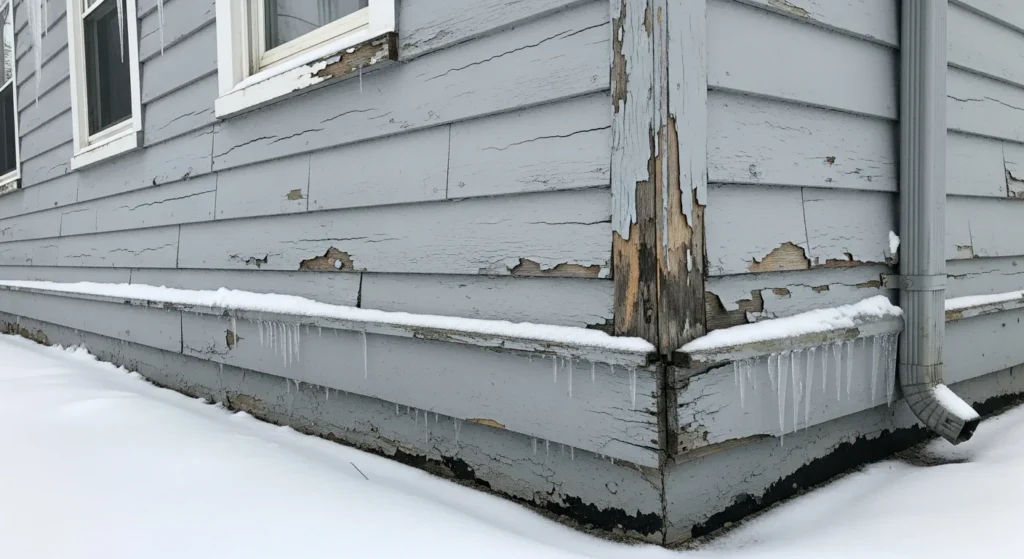
2. Siding Cracks and Moisture Intrusion
Your siding protects your home from the elements, but winter can weaken it more than you think.
What Causes the Damage
Cold temperatures make materials contract, while warmer days cause them to expand. Over time, this creates small cracks or gaps.
What to Check
- Hairline cracks in vinyl or wood siding
- Warping or bubbling panels
- Loose or missing sections
- Discoloration or soft spots
Why It Matters
Even tiny cracks can let water seep behind your siding. This can lead to mold, rot, and insulation damage, issues you won’t notice until they get serious.
3. Foundation and Concrete Shifts
Winter doesn’t just affect your roof and siding, it can also impact your home’s foundation.
How It Happens
When water in the soil freezes, it expands. This puts pressure on your foundation and nearby concrete surfaces like driveways and walkways.
Warning Signs
- Small cracks in foundation walls
- Uneven or lifted concrete slabs
- Gaps around doors and windows
- Doors that suddenly stick or don’t close properly
Why It Matters
Foundation issues can start small but grow quickly. Left unchecked, they can affect your home’s structure and lead to very costly repairs.
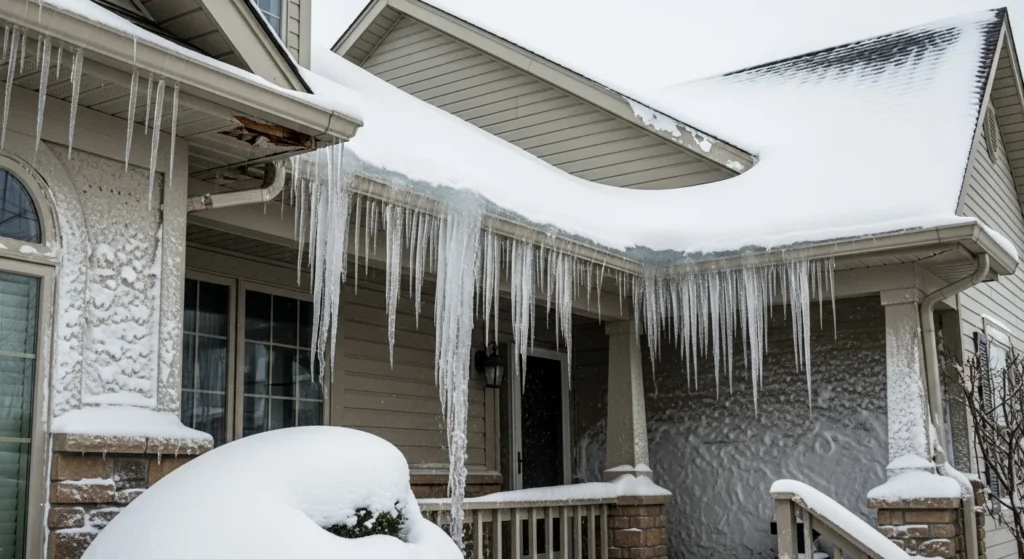
4. Gutter and Downspout Damage
Gutters play a big role in protecting your home, but winter can quietly damage them.
Common Winter Problems
Ice buildup and heavy snow can cause gutters to sag or pull away from your home. Debris from winter storms can also create hidden clogs.
What to Look For
- Gutters that are loose or sagging
- Water spilling over the sides
- Pools of water near your foundation
- Downspouts not draining properly
Why It Matters
Damaged gutters can’t direct water away from your home. This can lead to foundation damage, basement leaks, and soil erosion.
5. Exterior Paint and Sealant Breakdown
Paint and sealants are your home’s first line of defense against moisture, but winter can wear them down.
What Causes the Damage
Freezing temperatures make paint brittle, causing it to crack or peel. Caulking around windows and doors can also shrink or break.
What to Check
- Peeling or flaking paint
- Cracked or missing caulking
- Gaps around windows and doors
- Exposed wood surfaces
Why It Matters
Once protective layers break down, moisture can get inside your walls. This leads to rot, mold, and higher energy bills.
How to Inspect Your Home for Winter Damage Safely
A simple spring inspection can help you catch problems early.
Basic Checklist
- Walk around your home and look for visible damage
- Check your attic for signs of moisture
- Inspect gutters and downspouts
- Look closely at siding and paint
- Check your foundation for cracks
Safety Tips
- Never climb onto your roof without proper equipment
- Use binoculars to inspect hard-to-see areas
- Be cautious around ladders
- Avoid inspecting during wet or windy conditions
When DIY Isn’t Enough
Some damage is hard to spot without training. That’s where a professional inspection makes a big difference.
When to Call a Professional
Not all problems can or should be handled on your own.
Call a Professional If You Notice:
- Water stains inside your home
- Missing or damaged shingles
- Sagging gutters
- Cracks in your foundation
- Signs of mold or rot
A trained roofing and exterior specialist can find issues you might miss and recommend the right solution.
Don’t Let Hidden Winter Damage Turn Into Expensive Repairs
Winter may be over, but the damage it leaves behind doesn’t stop there. Most exterior problems start small and stay hidden, which is why they’re often ignored until they become expensive repairs.
Taking a little time now to inspect your home can save you thousands later. And if you’re not 100% sure what to look for, it’s worth having a professional take a closer look.
At Paramount Exteriors, we specialize in identifying and fixing winter-related damage before it turns into major issues. From roofing and siding to full exterior inspections, our team knows exactly where problems hide and how to handle them.
If you have any concerns about your home after winter, now is the time to act. Contact us today for a free inspection and make sure your home is fully protected going into the season.